
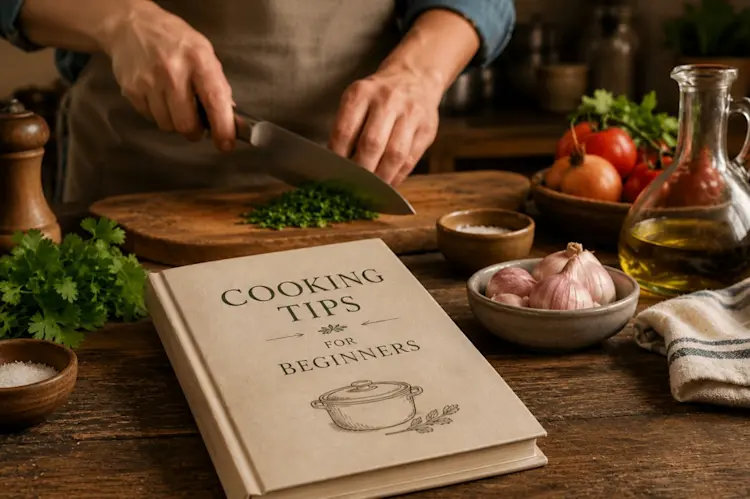
Most people who say they "can't cook" haven't failed at cooking — they've just never been shown the handful of basic skills that everything else builds on. You don't need forty techniques to get comfortable in a kitchen. You need about five or six, done well and repeated until they're automatic.
This guide covers the techniques worth learning first, how to measure so your recipes turn out the same way twice, the safety habits worth building early, and how to read a recipe the way an experienced cook does , with an eye for what matters. Along the way, we'll point you to the cuts we'd hand a beginner, because the right piece of protein does half the work for you.
What are the most important cooking techniques?
A short list of foundational techniques will get you through the vast majority of everyday recipes:
Sautéing. Cooking food quickly in a small amount of fat over medium-high heat. This is the base for most vegetable dishes, aromatics like onion and garlic, and quick proteins. The key mistake beginners make is crowding the pan — too much food at once drops the temperature and steams the food instead of browning it. Boneless chicken thighs are the most forgiving protein to practice on: they stay juicy even if you leave them on a minute too long.
Boiling and simmering. Boiling is a rolling, vigorous bubble (used for pasta, blanching vegetables); simmering is a gentle, occasional bubble (used for sauces, stocks, braises). Confusing the two is one of the most common beginner errors — a hard boil where a recipe calls for a simmer can toughen proteins or break a sauce. A beef chuck roast or bone-in beef chuck short ribs will teach you the difference in one afternoon: both go tender at a lazy simmer and tough at a boil.
Roasting. Dry heat in the oven, usually 375°F–425°F (190°C–220°C), used for vegetables and larger cuts of meat. Roasting rewards patience: don't check the oven every five minutes, and don't overcrowd the pan, or you'll end up steaming instead of browning. A whole young chicken is the classic first roast — one bird, one pan, and dinner for several days.
Searing. A hard, hot sear on protein (meat, fish, tofu) before finishing it another way builds flavor through the Maillard reaction — the browning that happens when proteins meet high heat. Pat food dry first; moisture on the surface is the number one reason a sear doesn't develop. Thin, fast-cooking cuts like outside skirt steak give you the most feedback in the least time, and picanha is worth graduating to once you trust your pan.
Deglazing. Adding liquid (wine, stock, even water) to a hot pan after searing to lift the browned bits stuck to the bottom. Those browned bits carry most of the flavor, so this step turns a "wasted" pan into the base of a sauce.
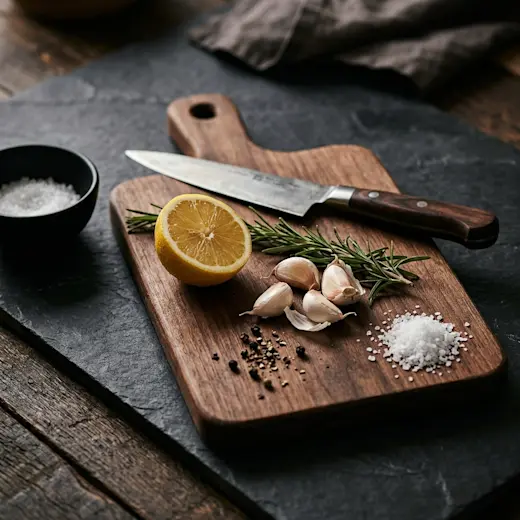
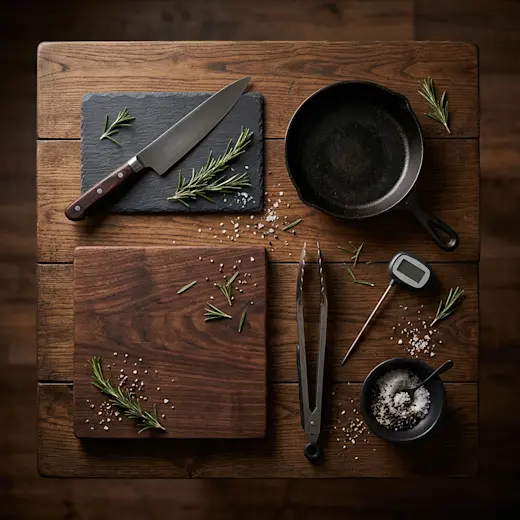
Knife work. Before any of the above matters, you need to be able to cut food consistently. Chopping produces smaller, irregular pieces for things like salsa or stir-fry; dicing produces uniform cubes for soups and stews; slicing produces thin, even pieces for meat, fruit, and vegetables. In each case, the same basic pattern applies: make even slices first, then cut across them to get the final shape. A chef's knife (roughly 6–10 inches) handles most everyday jobs, while a paring knife (3–4 inches) is better suited to small, precise work like peeling or trimming.
One shortcut worth knowing: our butchers do the hard cuts before the product ever reaches you. Everything across beef and steaks, chicken, pork, and seafood arrives portioned and trimmed, so a beginner isn't fighting a whole primal on a wobbly cutting board.
Learn these six, and most recipes stop looking like a foreign language.
How to measure ingredients accurately?
When results are inconsistent, measuring is usually the problem. A few habits fix most of it:
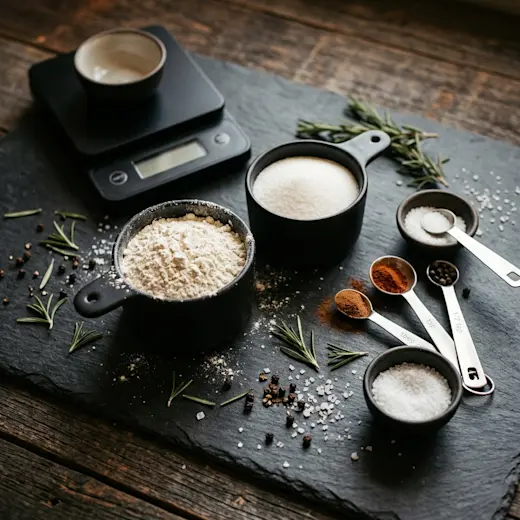
Weigh dry ingredients when you can. A cup of flour can vary by 20–30 grams depending on how it's scooped. A kitchen scale removes that guesswork entirely, especially for baking, where ratios matter more than in savory cooking.
Use the spoon-and-level method for cups. Spoon flour or sugar into the measuring cup rather than scooping directly from the bag, then level it off with the flat edge of a knife. Scooping packs the ingredient down and can add up to 20% more than the recipe intends.
Liquid and dry measuring cups aren't interchangeable. Liquid cups have a spout and are meant to be read at eye level; dry cups are meant to be filled and leveled flat. Using one for the other introduces small errors that compound in baking.
Salt and spices work differently. Season to taste for salt, acid, and spice instead of following the recipe's amount blindly — ingredient brands and personal tolerance vary too much for a fixed number to always be right.
A scale helps with protein, too. Buying by weight instead of by "a piece of chicken" is how you learn what four ounces actually looks like, and it's why every listing in our full catalog shows piece count and package weight up front.
What kitchen safety rules matter most?
A few habits prevent the majority of kitchen accidents and foodborne illness:
Keep knives sharp, not dull. A sharp knife requires less force and is more predictable, which makes it safer. Dull knives slip.
Curl your guiding fingers under, not out. When holding food steady with your non-dominant hand, tuck your fingertips inward so your knuckles — not your fingertips — face the blade. This "claw" position lets you guide the food while keeping the blade running along your knuckles instead of your fingers.
Hone your knife before you use it, not after. A quick pass on a honing rod at roughly a 15–20 degree angle realigns the edge and keeps cuts predictable; save the whetstone for periodic deeper sharpening.
Separate raw and ready-to-eat foods. Use different cutting boards (or wash thoroughly between uses) for raw meat and produce that won't be cooked afterward, like salad greens. This is the single biggest cross-contamination risk in a home kitchen.
Cool and refrigerate leftovers within two hours. Bacteria grow fastest between 40°F and 140°F (4°C–60°C) — the "danger zone." Leaving food out longer than two hours, or one hour in hot weather, meaningfully increases risk.
Keep a lid or baking sheet near the stove, not water, in case of a grease fire. Water on a grease fire spreads flames rather than putting them out.
Cook proteins to safe internal temperatures
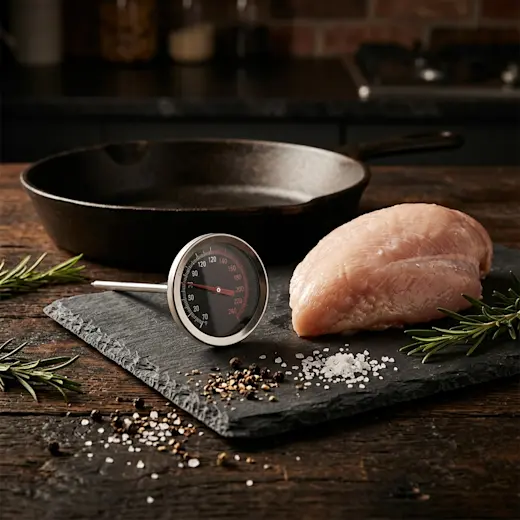
A thermometer is more reliable than color or time alone:
Protein | Safe internal temperature |
Poultry — whole chicken, thighs, wings | 165°F (74°C) |
Ground meats — ground beef, burgers | 160°F (71°C) |
Whole cuts of beef and pork | 145°F (63°C), plus a rest |
One more habit that saves a lot of stress: buy frozen and thaw on purpose. Everything we sell is blast-frozen and vacuum-sealed at peak freshness, so you thaw only what you're cooking that night instead of racing a "use by" date. Move it from freezer to fridge the day before, and never thaw on the counter.
How to read and follow recipes?
Reading a recipe well is its own skill, separate from cooking it:
Read the entire recipe before you start, not just the ingredient list. Recipes often bury important information mid-instructions — a marinating time, a resting period, an oven that needs preheating twenty minutes in advance.
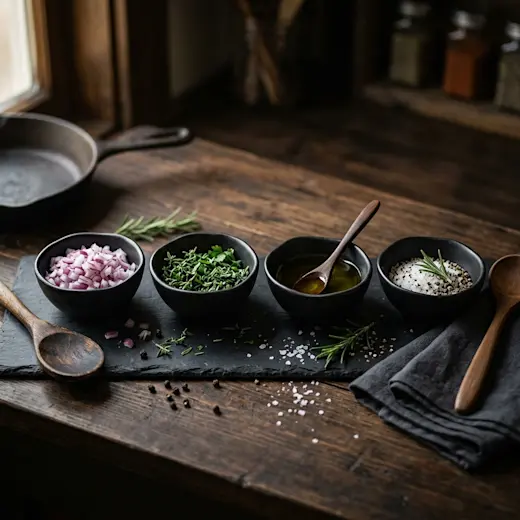
Do your mise en place first. Chop, measure, and portion everything before turning on any heat. Recipes move fast once cooking starts, and having ingredients half-prepped is where most mistakes and burnt garlic happen.
Pay attention to descriptive cues, not times alone. "Cook 5–7 minutes until golden and fragrant" is giving you a sensory checkpoint, not a countdown — your stove, pan, and ingredient size will all shift the actual time.
Understand the difference between substitution and improvisation. Swapping one white fish for another is usually safe — anything in our fish selection will behave similarly in a pan, and skinless salmon portions are an easy stand-in for most fillet recipes. Swapping baking soda for baking powder is not, since they behave completely differently. If a recipe doesn't explain why an ingredient is there, it's worth a quick search before assuming it's flexible.
Trust your senses over the clock once you've cooked something a few times. Recipes are written for average conditions. Yours may not match exactly, and that's normal.
Build your starter kitchen: what to buy first
You don't need a full freezer to start. These are the cuts we'd stock for someone learning — forgiving, affordable, and each one teaches a different technique.
What to buy | What it teaches you |
Sautéing and searing without the fear of drying out. Nearly impossible to ruin. | |
Roasting, resting, and how to use a thermometer. One bird, several meals. | |
The difference between a simmer and a boil, and why low and slow works. | |
Browning, seasoning to taste, and cooking to a safe 160°F. | |
A fast, hot sear and the Maillard reaction, in under ten minutes. | |
Cooking delicate protein by feel instead of by the clock. | |
Oven technique — dry heat, spacing, and patience — with a crowd-pleasing payoff. |
Where to shop next
Quick & Easy — pre-seasoned and prepped cuts for the nights you don't want a project.
Ready Meals — heat-and-eat dishes worth keeping in the freezer as a backup plan.
Wild Savings and 2 for Less — the cheapest way to practice a technique more than once.
Game Day — when you're ready to cook for a room instead of a plate.
New Products — for when the basics stop feeling like a challenge.
None of this requires natural talent — it's repetition of a small number of habits until they stop feeling like instructions and start feeling like instinct. Start with one new technique at a time, pick one cut to master it on, and the rest of the kitchen gets easier faster than most beginners expect.