
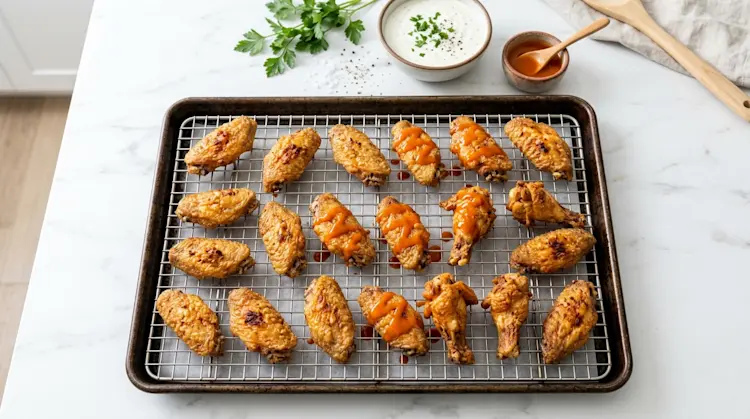
If you've ever pulled a tray of "baked" wings out of the oven only to find pale, rubbery skin, you already know the problem isn't the recipe — it's the temperature and timing. Get those two things right, and an oven can turn out wings that are every bit as crispy as the fryer version, minus the oil splatter. Here's the short answer before we dig into the details: bake wings at 400–425°F (204–218°C) for 40–50 minutes, flipping them halfway through, until they hit an internal temperature of 165°F (74°C). The other half of the equation is what goes on the tray. Our chicken wings are blast-frozen at peak freshness and packed IQF, so you can thaw exactly the amount you need — a snack for two or five pounds for game day — and leave the rest in the freezer. Now let's break down exactly why 425°F works, and answer the questions people actually search for when they're standing in front of the oven with a bag of wings.
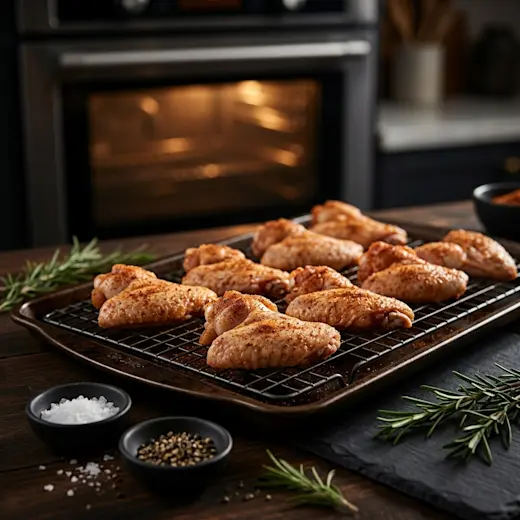
What temperature makes crispy oven-baked chicken wings?
The sweet spot most home cooks and recipe developers land on is 400°F to 425°F. At that range, the fat under the skin has enough heat to render out and the surface moisture evaporates fast enough to crisp before the meat overcooks.
400°F: gives you a slightly more forgiving window — usually 45–55 minutes — with less risk of burning if your oven runs hot or your tray is a little crowded.
425°F: crisps the skin faster, typically in 35–45 minutes, and is the go-to choice when you want that fried-wing texture without extra steps.
350°F or lower: will still cook the wings through, but the skin stays softer since there isn't enough heat to render the fat quickly. Some cooks use a low-and-slow start (around 250°F for an hour or more) specifically to melt out fat, then finish at high heat to crisp — it works, but it takes far longer for a similar result.
A couple of details matter as much as the number on the dial:
Dry the wings thoroughly with paper towels before seasoning. Surface moisture is the number one enemy of crispy skin, since the oven has to cook off that water before browning can even start.
Use a wire rack over a baking sheet instead of laying wings flat on the pan. This lets hot air circulate underneath, so the skin crisps on all sides instead of steaming against the pan.
A light dusting of baking powder (not baking soda) mixed into your seasoning helps too — it raises the pH of the skin, which speeds up browning and gives you a texture closer to fried.
Whatever temperature you choose, don't go by time alone. Wing size varies, and ovens run hotter or cooler than their dial says. The only way to know for sure is a meat thermometer.
Should you flip chicken wings while baking?
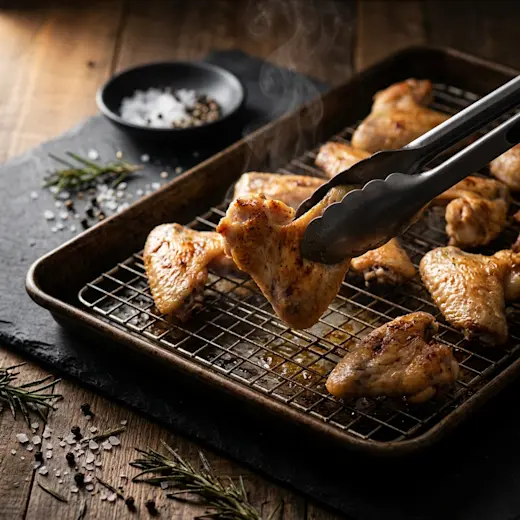
Yes — flip them once, roughly at the halfway point of the total bake time. If you're baking at 425°F for 40 minutes, that means flipping around the 20-minute mark. Flipping matters for two reasons:
Even browning. Wings sitting skin-side up will crisp beautifully on top but stay pale underneath if you never turn them. A single flip lets both sides get direct exposure to the hot air.
Even fat rendering. The underside of the wing rests against the rack and gets slightly less airflow. Turning it exposes that side to the same heat the top got.
You don't need to flip constantly — once is enough for most recipes. A few cooks who bake low-and-slow before crisping at high heat will flip two or three times over a longer cook, but for a standard 35–50 minute bake, one flip halfway through does the job. One thing to skip: don't move the wings around on the rack every few minutes just to check them. Opening the oven repeatedly drops the temperature and adds time to your bake. Set a timer, flip once, then check for doneness near the end.
Does sauce affect cooking time for wings?
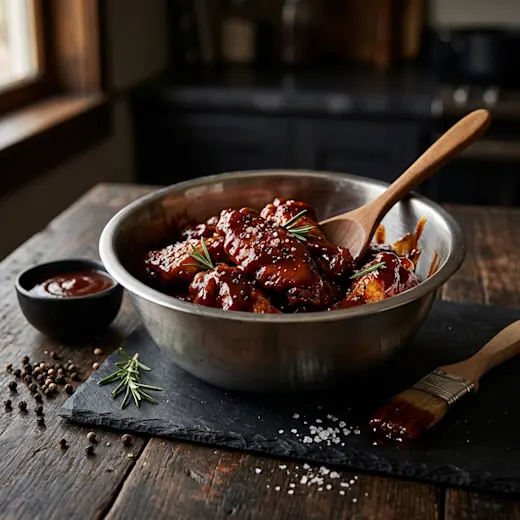
Not if you add it the right way. The standard method — and the one that keeps wings crispy — is to bake the wings completely plain, then toss them in sauce after they come out of the oven. Sauce added before or during baking sits on the skin, traps moisture, and steams the surface instead of letting it crisp, so pre-sauced wings almost always come out softer. If you specifically want baked wings with sauce already on (like an oven-baked "hot wing" style rather than a fresh toss), a couple of adjustments do work:
Brush on a thin layer of sauce only during the last 5–10 minutes of baking, after the skin has already mostly crisped. This adds flavor and a bit of glaze without giving moisture enough time to soak in.
Skip thick, sugary sauces early in the bake — sugar burns well before the wing itself is done, especially at 425°F.
So the cooking time for the chicken itself doesn't change based on sauce a wing still needs to hit 165°F internally regardless of what's on it. What changes is texture: sauce added too early costs you crispiness, not time. If you'd rather skip the mixing bowl altogether, our Garlic Chicken Wings come pre-seasoned by our in-house chefs and go straight onto the rack — same temperature, same timing, no measuring.
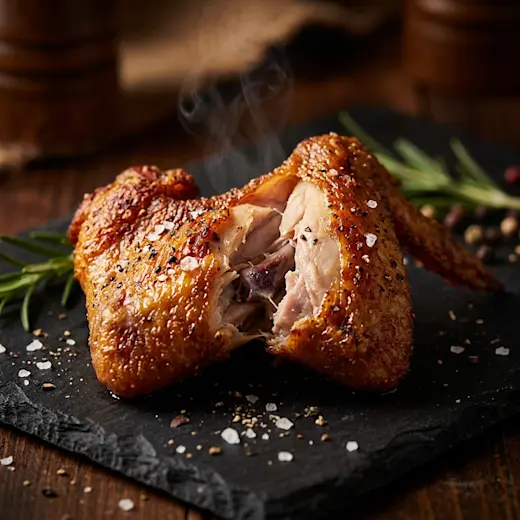
How to make wings crispy without frying
This is the sum of everything above, but here's the full method in one place:
Pat the wings bone-dry. Use paper towels and press firmly — don't just wipe.
Keep the seasoning simple and add baking powder. About 1 tablespoon of baking powder per 2 pounds of wings, mixed with salt and whatever dry spices you like. Our All Purpose Seasoning covers the basics in one shake, and the Latin BBQ Rub is the move if you want smoke and a little heat.
Place them on a wire rack set inside a foil-lined baking sheet, skin side up, with space between each piece so they aren't touching.
Bake at 425°F for about 40–45 minutes, flipping once around the 20-minute mark.
Check for doneness with a thermometer — 165°F in the thickest part, away from the bone. The skin should look deep golden brown and feel firm, not soft, when you press it with tongs.
Rest for 5 minutes, then sauce or serve. Resting lets juices settle and keeps the sauce from sliding off oil that's still sizzling on the surface.
A few extra tricks that consistently show up across tested recipes if you want to push the crispiness further:
Air-dry uncovered in the fridge for a few hours (or overnight) before baking. This does the same moisture-removal job as paper towels, just more thoroughly.
Avoid overcrowding the pan. Wings that touch each other steam instead of roast. If they don't fit in a single layer with breathing room, use two trays.
Thaw frozen wings completely first — overnight in the fridge or with a quick cold-water thaw — so the outside isn't still icy while the oven tries to crisp it. Because our wings are individually quick frozen, you can pull out just the pieces you're cooking and keep the rest sealed.
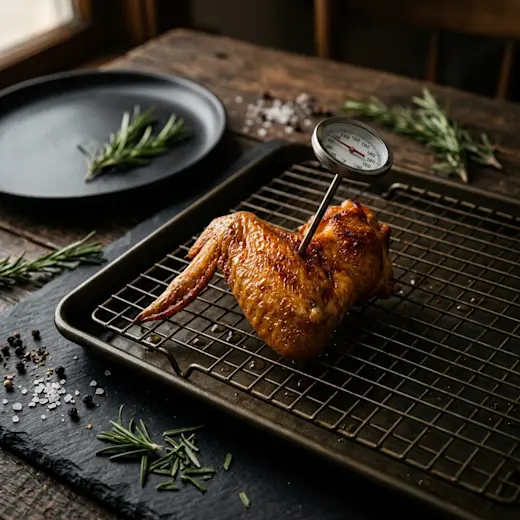
Quick reference: chicken wings baking time by temperature
Oven Temperature | Approximate Bake Time | Flip Wings? |
350°F (177°C) | 55–65 minutes | Yes, once |
400°F (204°C) | 45–55 minutes | Yes, once |
425°F (218°C) | 35–45 minutes | Yes, once |
450°F (232°C) | 25–30 minutes | Yes, once |
Regardless of temperature, the real finish line is 165°F (74°C) internal temperature, which is the U.S. food-safety standard for poultry. Time is only ever an estimate — the thermometer is what tells you the wings are actually done.
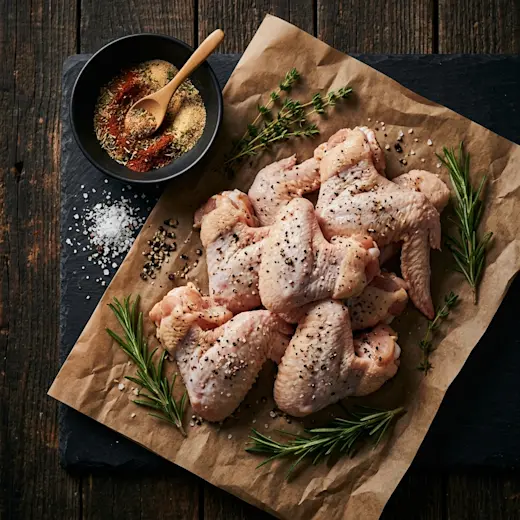
Shop the wings: what we'd put on the tray
Every wing below is blast-frozen and vacuum-sealed, and everything ships straight to your door.
Product | Why we'd pick it |
Already split into flats and drumettes, so there's no butchering and everything cooks at the same rate. The default choice for oven wings. | |
Whole wings hold more moisture during a long bake. Split them yourself or roast them whole for a bigger, meatier piece. | |
Certified organic, individually frozen cook four wings or forty without thawing the whole bag. | |
Pasture raised, party-cut and ready for the rack. Worth the upgrade when the wings are the main event. | |
Pre-seasoned with garlic, herbs and citrus. Season nothing, bake at 425°F, done. | |
Rubs for before the oven, sauces for the toss after. Build two or three flavors from one tray of wings. |
Browse the full chicken wings and drumsticks collection to see everything in stock in your area.
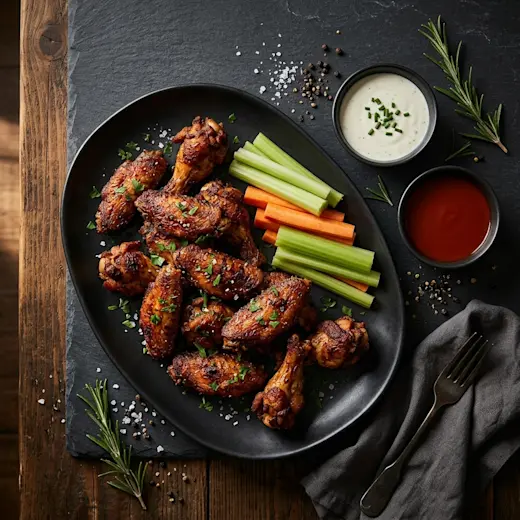
Round out the spread
Wings rarely go out alone. Add a few appetizers that bake on a second rack while the wings finish, a couple of sides to stretch the tray across a crowd, and check the Game Day collection if you're feeding a room instead of a table.
One oven, one rack, 45 minutes — and wings that crackle when you bite them. Start your order and get them delivered.