
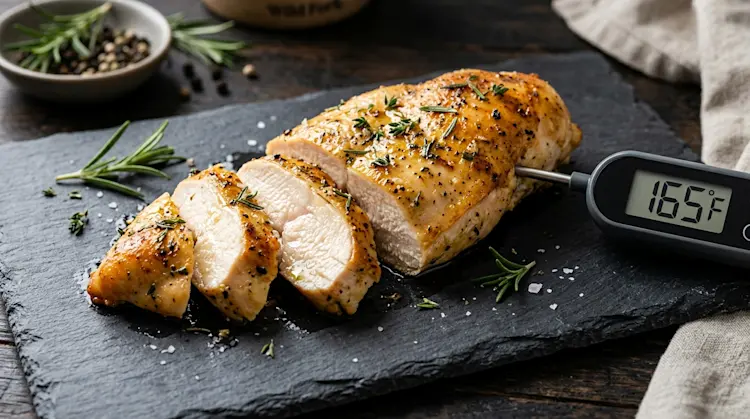
Oven-baked chicken breast has a reputation problem, and it's earned honestly: it's the protein most people cook most often and the one most likely to come out dry, stringy, or both. The good news is that fixing it doesn't take a new recipe — it takes two numbers, temperature and time, and one tool, a thermometer.
Here's the short answer before the details: bake boneless chicken breasts at 375°F–400°F for 20–30 minutes, or bone-in breasts at 375°F for 35–45 minutes. Whatever the number on the dial, the real finish line is 165°F (74°C) at the thickest part, followed by a five-minute rest.
The other half of the equation is what goes on the tray. Our chicken breast is blast-frozen and vacuum-sealed at peak freshness, so you thaw exactly what you're cooking and leave the rest sealed.
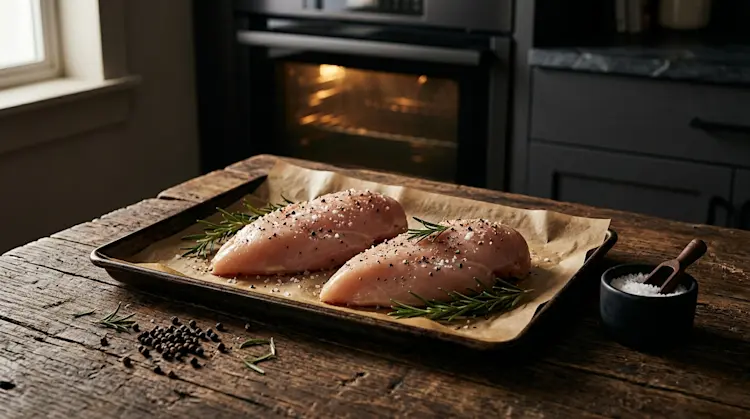
What temperature should you bake chicken breast at?
You have two good options, and the right one depends on how much time you have and what texture you want:
375°F (190°C): the default. Moderate heat gives the center time to cook evenly before the surface dries out, usually in 20–30 minutes for a 6- to 8-ounce boneless breast.
400°F–425°F (204°C–218°C): faster and browner. High heat gives you a golden surface in 18–22 minutes, but the window between juicy and dry shrinks — start checking early.
350°F (177°C): the bone-in setting. Lower heat is more forgiving with bone, which slows heat transfer to the center; expect 35–45 minutes.
Two details matter as much as the temperature itself:
Preheat fully. Give the oven 15–20 minutes. Chicken that goes into a cold oven cooks unevenly and loses more moisture overall.
Trust your oven less than your thermometer. Home ovens often run 25°F off the dial in either direction, which is why an inexpensive oven thermometer is the cheapest upgrade in the kitchen.
And one variable people miss: thickness. A thin 6-ounce breast and a thick 10-ounce one are not the same cook, even at the same temperature. The thick end of a large breast can take ten minutes longer than the thin end of a small one, so size matters more than weight.
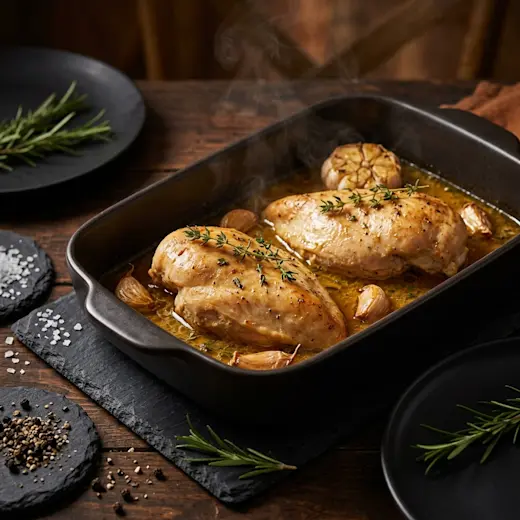
How long does chicken breast take to cook in the oven?
Time is an estimate — thickness, starting temperature, and oven accuracy all move it. Use this table to plan, then let the thermometer call it:
Cut & method | Approximate time | Target temp |
Boneless breast (6–8 oz), 375°F | 22–30 minutes | 165°F |
Boneless breast (6–8 oz), 425°F | 18–22 minutes | 165°F |
Bone-in split breast, 375°F | 35–45 minutes | 165°F |
Chicken tenders, 375°F | 15–20 minutes | 165°F |
Whole bone-in breast, 375°F | 40–50 minutes | 165°F |
These ranges track with the USDA's single poultry standard — 165°F measured with a food thermometer — and with the FSIS reminder that time is never the final word. Chicken keeps cooking after it leaves the oven, so pulling a breast at 160–162°F and letting carryover heat finish the job is the standard move for juicy meat, not a shortcut.
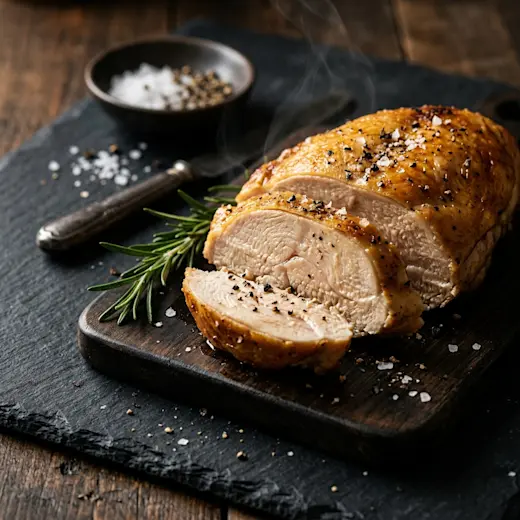
How do you keep chicken breast from drying out?
Breast meat is lean and thin, which means it has a narrow margin for error. Five habits protect it:
Brine, even briefly. A 15- to 30-minute soak in 4 cups of cold water with 1/4 cup of kosher salt seasons the meat and helps it hold moisture. It's the fastest way to add insurance.
Pat it dry, then oil it lightly. Surface water steams; a thin coat of oil helps seasoning stick and the surface brown.
Even out the thickness. Pound or butterfly thick breasts to a uniform thickness. Even thickness is the single best way to avoid a dry edge and a raw center.
Pull it early. Take the breast out at 160–162°F and let carryover cooking bring it to 165°F during the rest.
Rest five minutes. Resting lets the juices redistribute instead of running onto the cutting board.
If you have more time, a dairy-based marinade — yogurt or buttermilk — is the most forgiving option for chicken breast: 2–4 hours is plenty, and unlike citrus-heavy marinades, overnight won't turn the surface mushy.
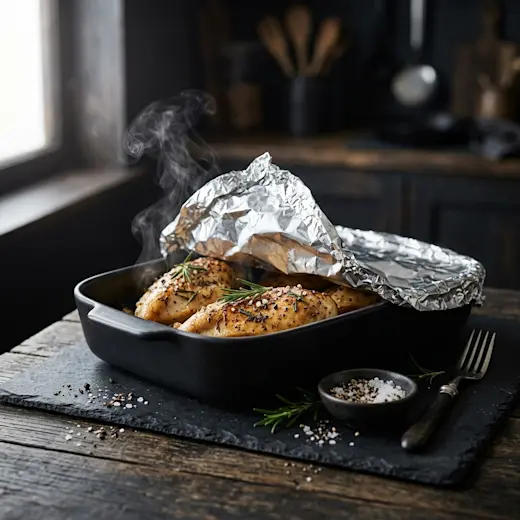
Should you cover chicken breast with foil in the oven?
For a standard bake, no. Covering the pan traps steam, and steam is what turns a browned surface soft and pale — the same reason you don't cover roasting vegetables. Leave the breast uncovered for the whole bake.
The exception: if the top is browning faster than the center is cooking, which happens with bone-in pieces at high heat or when an oven's top element runs hot, lay a sheet of aluminum foil loosely over the pan for the last 5–10 minutes. After baking, tent the chicken with foil while it rests — tenting holds heat without steaming the crust the way wrapping would.
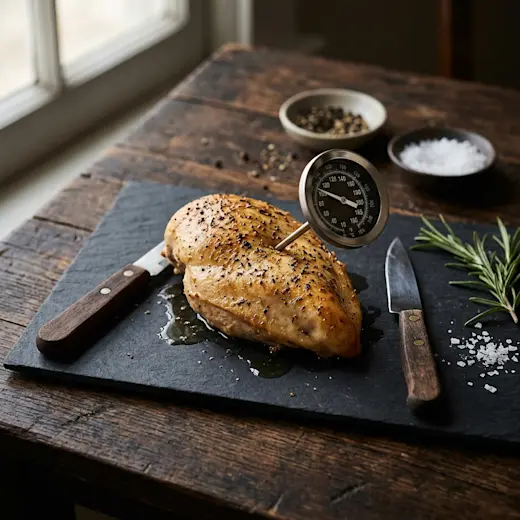
How do you know when chicken breast is done?
Use a thermometer. Insert an instant-read probe into the thickest part of the breast, away from bone and fat, and look for 165°F (74°C). The USDA's Food Safety and Inspection Service sets 165°F as the minimum safe internal temperature for all poultry because it destroys Salmonella and Campylobacter — the pathogens of greatest concern in raw poultry — essentially instantly.
The cues people rely on instead aren't reliable:
"The juices run clear." Juice color depends on the bird's age and chilling, not doneness. The USDA notes the pink liquid in packaged chicken is mostly water absorbed during chilling.
"No pink inside." Young birds often keep a pink tinge near the bone even when fully cooked and safe.
"It's been 25 minutes." Two same-size breasts can differ by minutes. Time estimates the cook; the thermometer finishes it.
And handle the leftovers with the same standard: refrigerate within two hours and reheat to 165°F.
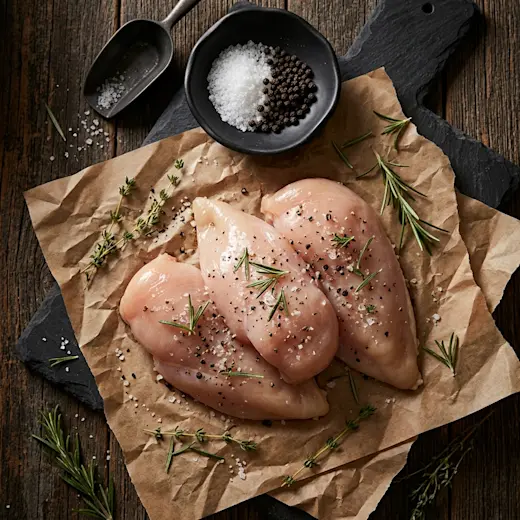
Shop the chicken: what we'd put in the oven
Every cut below is blast-frozen at peak freshness and vacuum-sealed, so you thaw only what you're cooking tonight.
Product | Why we'd pick it |
The all-purpose default: boneless, skinless, and sized for even cooking. The cut most oven-chicken dinners start with. | |
Certified organic in the same boneless, skinless format. The pick when organic matters to your household. | |
Pasture raised and trimmed to consistent thickness, which means fewer timing surprises tray to tray. | |
Kosher certified. Note that kosher processing salts the meat, so season lightly and skip the brine. | |
Salt, pepper, and garlic in one shake — the fastest way to season a tray before it goes in. |
Round out the plate
Quick & Easy — pre-seasoned and prepped cuts for the nights you don't want a project. Ready Meals — heat-and-eat dishes worth keeping in the freezer as a backup. Wild Savings and 2 for Less — the cheapest way to practice an oven method more than once. Game Day — for when the tray is feeding a room.
Temperature, time, and a thermometer — in that order. Get those right, and oven-baked chicken breast stops being a gamble and becomes the easiest dinner of the week.
Sources: USDA Food Safety and Inspection Service safe minimum internal temperature guidance and "Is It Done Yet?" food thermometer guidance; USDA guidance on safe thawing of poultry; FoodSafety.gov poultry safety guidance.